English
Washers
Applications
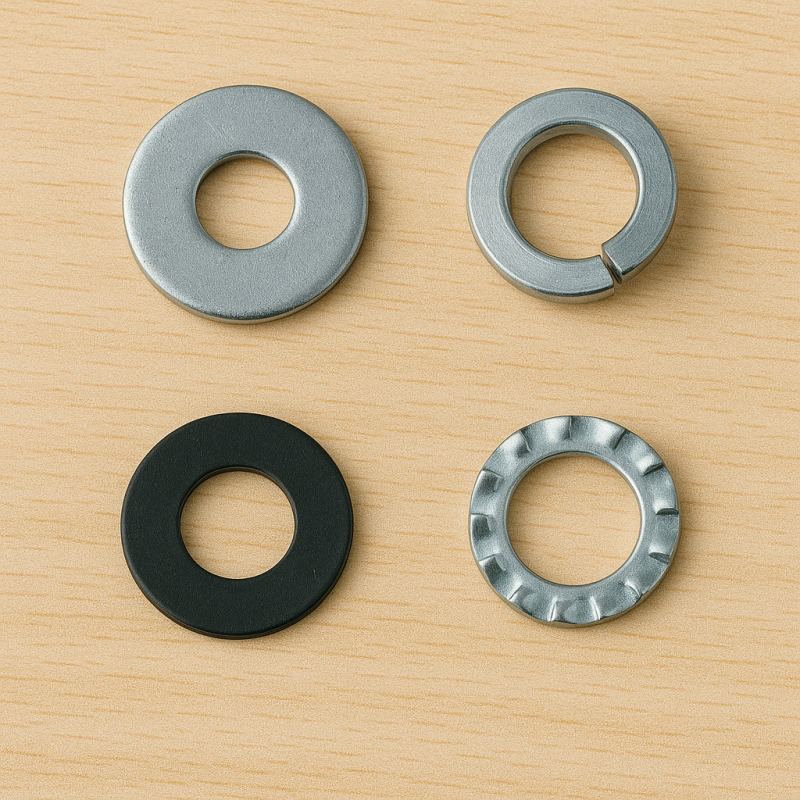
The primary function of a washer is to distribute the load generated by a bolted connection over a larger surface area. Without a washer, the applied torque would concentrate on a small area, potentially damaging the component. The washer spreads this force, reducing surface stress and preventing deformation.
This effect is particularly noticeable when fastening into wood or thin sheet metal, where the screw head could otherwise damage or crush the material. In addition, washers protect the surface of the workpiece, as the screw rotates against the washer rather than directly on the finished surface.
Materials
Washers are available in a wide range of materials:
-
Carbon steel
-
Hardened steel
-
Stainless steel (A2)
-
Acid-resistant stainless steel (A4)
-
Brass
-
Aluminum
-
Chemically resistant plastic (PA)
Types
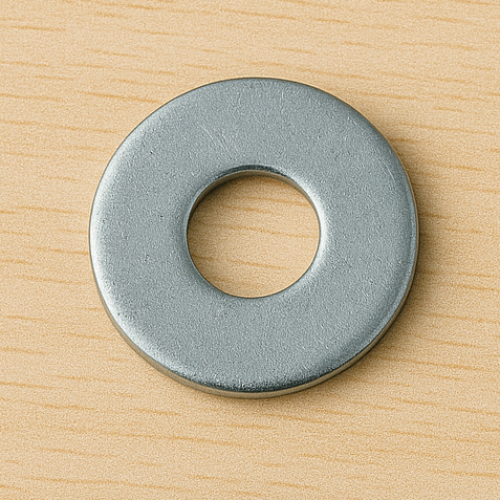
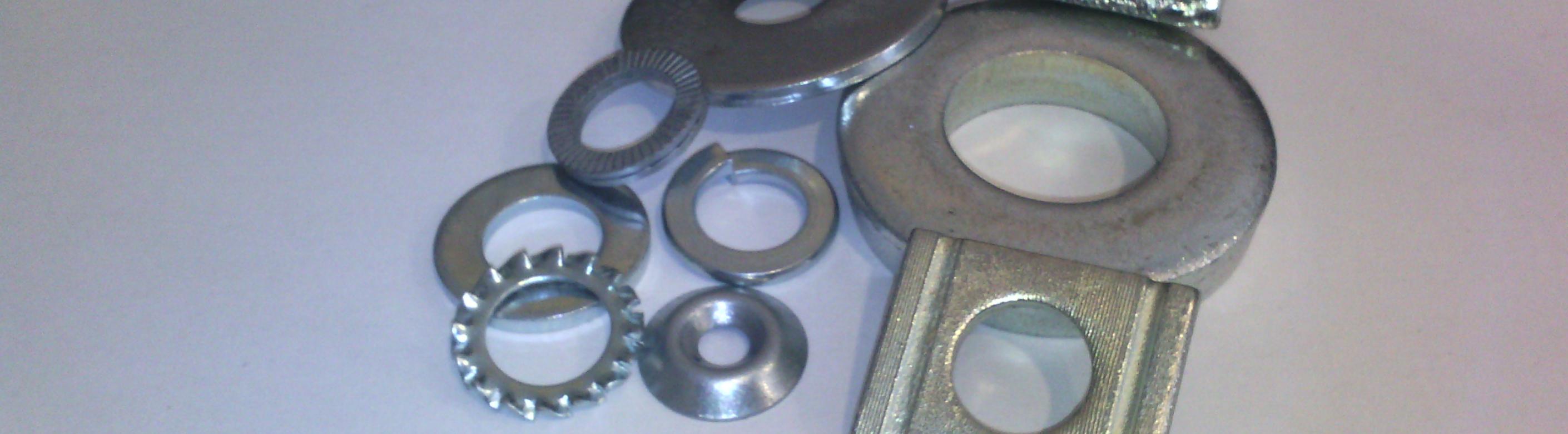
- DIN 125 – flat washers for general-purpose bolted connections
- DIN 440
- DIN 9021 – large outer diameter washers
- DIN 436 – square washers (commonly used in timber structures)
For timber applications, wide washers (timber washers) are typically used, available in both round and square shapes. The main differences between types lie in the ratio of outer diameter, inner diameter, and thickness. For example, DIN 9021 washers are often designed with an outer diameter approximately three times the hole diameter, making them easy to apply in design calculations.
Special washers
Washers for structural steel profiles:
- DIN 434 / DIN 435 – washers for U and I beams
- Designed to compensate for the slope of structural steel surfaces
- U washers: approx. 8% slope compensation
- I washers: approx. 14% slope compensation
These washers ensure that the bolt can be tightened perpendicular to the surface, achieving full contact. Their larger hole diameter allows for easier alignment even when the bolt is inserted at a slight angle.
Sealing washers
For sheet metal and roofing applications, sealing washers are recommended. These typically consist of:
- A slightly conical metal washer
- A bonded elastomer layer (e.g. Neoprene or EPDM)
During installation, the elastomer deforms and creates a watertight seal around the fastening point.
Electrical applications
- Contact washers – improve electrical conductivity
- Insulating washers – prevent electrical conduction
Some insulating washers are designed to cover not only the contact surface but also the bolt shank and head, ensuring complete insulation.
Captive washer solutions
Captive washers are fixed onto the screw shank (typically by thread rolling), preventing them from falling off during assembly. They can be combined with:
- Flat washers
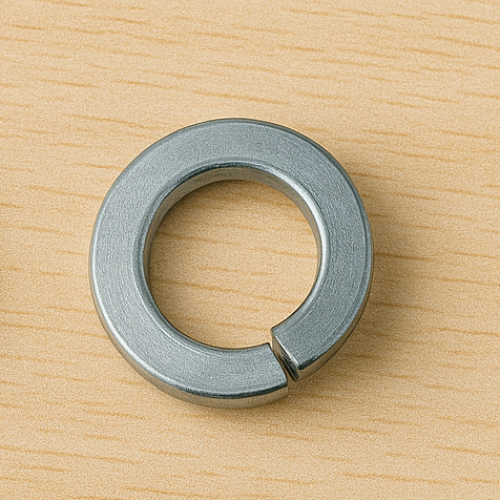
- Spring washers
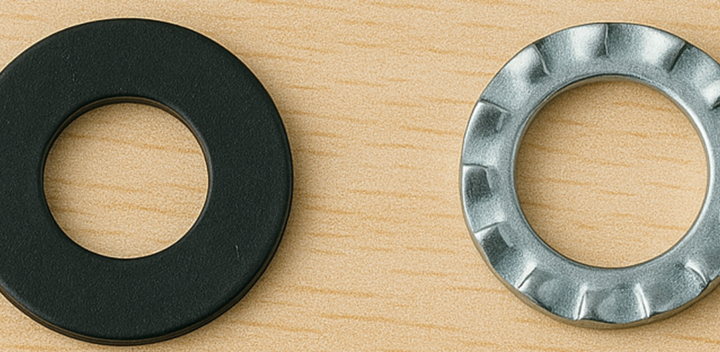
- Toothed washers
- Wave washers
These solutions improve efficiency by ensuring all components remain in place during installation.
A similar concept exists for nuts:
- Combination (flanged) nuts with captive washers, where the washer is permanently attached but remains freely rotating